


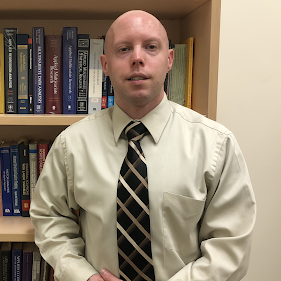
Christopher Dudek
Graduation Year: 2008
Major(s) and Minor: Major - Psychology; Minor – Music
Why did you choose Psychology as your major?
I initially entered Rutgers College wanting to be a high school biology teacher. However, during my first two years at Rutgers (Spring 2005), I became incredibly interested and passionate about psychology. My interest was heavily inspired by my Abnormal Psychology and Personality Psychology professors, who approached each subject from an eclectic perspective, and exposed their students to learning material content beyond the traditional textbook required for the class. Needless to say, all the “extra” resonated deeply with me and I found the subject matter highly engaging. Still do!
What did you like most about it?
What I like most about psychology comes down to its every day relevance and its intersection with many other disciplines. There’s connections to anthropology, religion, biology, philosophy and many other disciplines, as well as the ideas, theories, and phenomena that are unique to psychology alone. All of these things can come together within the discipline to govern and explain every day human behavior and how our minds work.
What is your current position, what do you, and what do you enjoy most about it?
Currently I am a project manager for a research grant at the Graduate School of Applied and Professional Psychology at Rutgers. The current study I manage, the Rutgers Paraprofessional Coaching Project, works to provide paraprofessional classroom aides with behavior support coaching to help implement evidence based behavioral interventions for students with challenging and disruptive behaviors. Essentially, I manage the day-to-day affairs of the project and oversee a staff of behavior support coaches and undergraduate research assistants that help implement the study. My position is a mix of responsibilities that includes: contributing to the research design and development of assessments, conducting outreach and PR to school participants, managing data collection, quality control, and analytics, supervising personnel and scholarly activities, as well as understanding US Dept. of Education grant processes, and fulfilling IRB requirements at the university.
What I like most about the position is that this large mix of responsibilities requires me to continuously learn, adapt, and engage multiple aspects of my personality and skillset. One day could be highly data analytics driven and the next could require me to invoke my artistic side. In short I have the opportunity to become involved in a process that requires a great many different pieces to be successful.
What was your first job after Rutgers and how did you get it?
My first job after Rutgers involved residential counseling for persons with mental illness. I helped persons coping with severe mental illness navigate day-to-day challenges and live their lives as best as possible. The one provider I worked for I found through news-paper and online employment advertisements, and the other provider I found through a Rutgers Career Fair for Alumni.
How did you move from that first job to your current position?
Networking was the primary catalyst for moving from residential counseling to my current research based position. When I was an undergraduate at Rutgers and for some time as a recent graduate, I was involved in several research projects and labs. I made sure when I finished each project or lab, to leave my contact information with the professor or lab-manager in the event any future opportunities came up and also kept in touch. About a year after graduating, I received a call from a new professor at Rutgers, Dr. Linda Reddy, who obtained my contact information thanks to one of the previous projects where I had volunteered as a research assistant. Dr. Reddy was looking for a recent graduate that had research experience to help manage a newly awarded research grant. Long story short, I have been serving in a similar capacity on multiple research grants for the past ten years.
Looking back, what classes or experiences at Rutgers would you point to as contributing to your successes?
From a professional perspective, I think the most importance experience contributing to my successes were the undergraduate research opportunities I engaged in during my time at Rutgers. My honors thesis along with the multiple labs and projects, provided practical experiences and exposure to the various research components you learn about in class, but most importantly, the real-world problems you encounter as part of the implementation process. In retrospect, I think these early experiences helped me develop a critical thinking and problem solving foundation that I continue to make use of today. My sincerest thanks and a shout out to Dr. Dan Ogilvie, Dr. Alan Leslie, Dr. Brian Chu, Dr. Adam Weissmann, and Dr. Carlton James!
What advice do you have for our current Arts and Sciences students?
Study hard, but don’t forget to be social, and take the initiative to seek out opportunities within the discipline! No matter where you wind up in the psychology field, I think you will find the psychology undergraduate program at Rutgers to be highly useful. Beyond course knowledge, there are a multitude of internships, practicum, and research experiences offered here at the university related to psychology. Check out that undergraduate research opportunity website frequently, and don’t hesitate to take the initiative and carve out your own experience with a professor.